
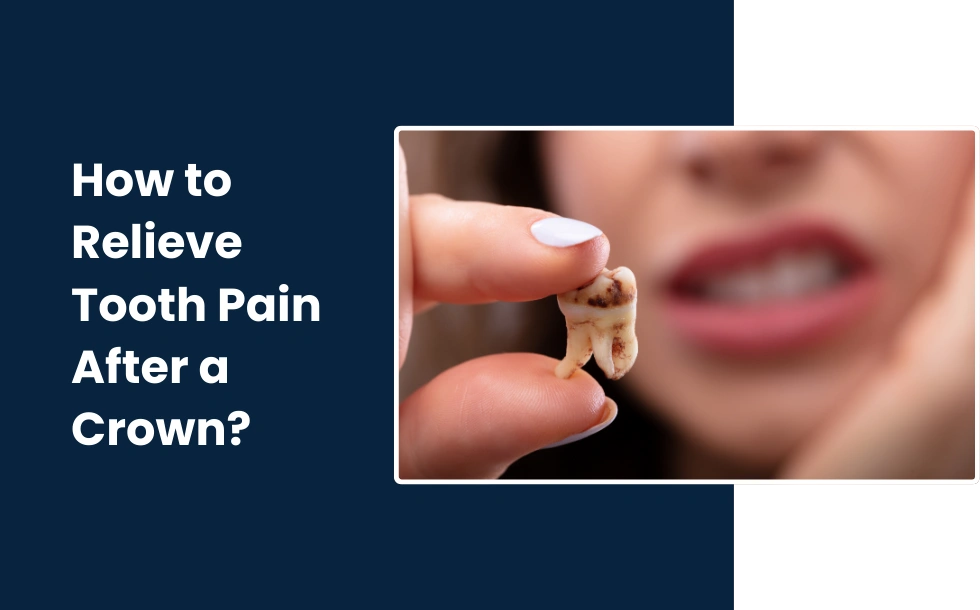
Tooth pain after a crown is usually caused by nerve irritation, gum soreness, or a bite that needs a small adjustment. Most cases improve within a few days, and simple steps like cold compresses, desensitising toothpaste, and salt water rinses often bring quick relief.
When pain becomes sharp, throbs, or worsens when biting, it may be a sign that the crown is too high or the nerve is inflamed. These problems are easy for a dentist to fix once identified.
This guide explains how to relieve pain after a crown, what normal healing feels like, and when you should seek dental care.
Best Ways to Relieve Pain After a Crown Procedure
Short-term relief helps the tooth settle while the gums recover. These methods are safe for most patients and support normal healing.

Pain-Relieving Medicines
Over-the-counter medications such as ibuprofen or acetaminophen can calm soreness and reduce inflammation during the first few days. They help manage short bursts of throbbing pain while the tooth adjusts.
Cold Compress and Temperature Relief
A cold compress placed on the cheek for ten to fifteen minutes helps numb the area and reduce swelling. It works well during the first one to two days after the procedure, especially if the gums feel tender.
Salt Water Rinses and Desensitising Products
Warm salt water rinses soothe irritated gums and help keep the area clean. Desensitising toothpaste can also help by blocking nerve signals that cause sharp sensitivity to hot or cold foods.
Eating Habits and Oral Care
Soft foods reduce pressure on the new crown because crunchy, sticky, or very hot foods often increase discomfort. Gentle brushing and flossing prevent plaque buildup and reduce gum irritation. If you grind your teeth at night, a nightguard can help prevent extra pressure on the crown.
Is It Normal to Have Pain After a Crown
Some soreness is expected after a crown procedure. The gums are slightly irritated, the enamel has been reshaped, and the tooth needs time to adjust to its new coverage. Most people notice improvement within a few days.
Pain becomes a concern when it is sharp, constant, or paired with swelling. These symptoms may indicate a deeper issue that needs evaluation.
Why You May Feel Pain After a Temporary Crown
Temporary crowns protect the tooth while the permanent crown is being made. Because they are not as strong or precise, they can cause short-term irritation. Sensitivity to cold air or foods, a small gap near the gums, or rough edges can all cause mild discomfort. These issues usually disappear once the permanent crown is placed.
Why You May Feel Pain After a Permanent Crown
Even when a permanent crown fits well, the tooth may remain sensitive while it adjusts. Nerve irritation from reshaping the tooth is common, especially when the decay was deep. A high spot on the crown can make biting painful because the tooth receives more pressure than the others. Gum swelling near the crown or small areas that need smoothing can also cause soreness.
These concerns are routine after a crown and are usually easy to correct.
Reasons for Tooth Throbbing After Crown Placement
Throbbing or biting pain often has an identifiable cause. Nerve irritation is common during the first few days and may create dull or brief sensitivity. A high bite is another frequent reason for pain. If the crown sits slightly higher than nearby teeth, chewing forces concentrate on one spot and trigger discomfort.
Hidden decay or small cracks beneath the crown can also irritate the nerve. Gum irritation around the crown margin or debris trapped near the tooth can create pressure. A loose or poorly sealed crown may also cause a dull ache. These issues can be evaluated and resolved during a dental visit.
Signs the Pain Is Not Normal
Pain that continues to grow instead of improving is a warning sign. Sharp discomfort when biting, long-lasting sensitivity, or swelling in the gums or jaw suggest the tooth is not healing as expected. A loose feeling in the crown or a bad taste near the area may point to irritation or an underlying infection. These symptoms should be checked promptly.
When to See a Dentist for Pain After a Crown
Pain after a crown becomes concerning when it affects chewing, speaking, or sleep. If soreness lasts longer than three to five days, the tooth may need assessment to ensure the crown fits correctly. Some people feel pressure under the crown or notice that their bite no longer feels natural. These issues usually require a simple adjustment.
Swelling, a loose sensation, or an unpleasant taste near the crown are additional warning signs. These symptoms may indicate irritation or a problem with the fit. Getting care early protects the tooth and prevents further discomfort.
Conclusion
Mild discomfort after a crown is common as the tooth adjusts and the gums recover. Cold compresses, salt water rinses, desensitising toothpaste, and soft foods all help ease short-term sensitivity. Pain that increases, affects the bite, or lingers beyond a few days is not typical. Concerns like nerve irritation, gum inflammation, a high bite, or hidden decay often require attention from a dentist. Early treatment helps protect the tooth and keeps the crown working comfortably.
FAQ’s
How long should tooth pain last after getting a crown?
Mild discomfort usually improves within three to five days. Pain that lasts more than a week or becomes stronger should be evaluated by a dentist.
How to stop tooth pain after getting a crown?
Warm salt water rinses, desensitizing toothpaste, soft foods, and over the counter pain relievers help reduce short-term discomfort. If pain continues, the crown may need adjustment or further care.