
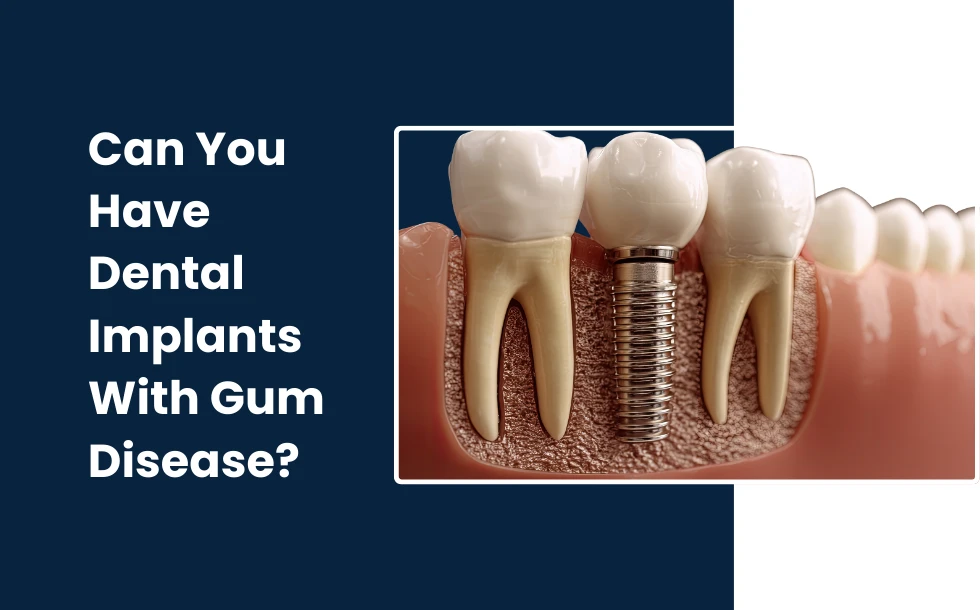
Being told you have gum disease while also needing tooth replacement can feel discouraging. Many patients worry that periodontal problems permanently rule out dental implants. Gum disease does not automatically disqualify you from implant treatment, but timing and proper care matter.
Dental implants rely on healthy gums and strong bone for long-term success. When gum disease is active, the risk of implant failure rises. Once the infection is treated and oral health is stabilized, many patients can move forward with implants. Understanding when implants are possible, and when they are not, helps you make informed decisions.
Can Dental Implants Be Placed If You Have Gum Disease
Gum disease affects the tissues and bone that support teeth. Active infection causes inflammation, bone breakdown, and deep pockets around the teeth. These same conditions interfere with how implants bond to the jawbone.
Implants are not placed while gum disease is active. Bacteria from untreated periodontal disease increase the risk of infection around the implant, known as peri-implantitis. This condition can lead to bone loss and implant failure.
Once gum disease is treated and the tissues heal, implant placement becomes possible for many patients. Infection control is the deciding factor, not a history of gum disease.

Does Gum Disease Go Away When Teeth Are Removed
Many patients assume removing damaged teeth also removes gum disease. This is not accurate. Gum disease lives in the gums and bone, not only on the teeth.
After tooth removal, infected gum tissue and bone can remain. Without periodontal treatment, the infection continues to progress even when teeth are missing. Treating gum disease remains necessary before planning implants or other restorations.
Successful implant treatment depends on healthy tissue around the implant site, not simply the absence of teeth.
Can You Get Dental Implants After Periodontal Treatment
Periodontal treatment focuses on eliminating infection and stabilising gum health. This may involve deep cleanings, antibacterial therapy, improved home care, and regular monitoring. In more advanced cases, surgical periodontal treatment may be required.
Once inflammation is controlled and gum health improves, many patients become candidates for implants. Dentists evaluate pocket depth, bone stability, and overall healing before recommending surgery.
A history of gum disease does not prevent implant success when the condition is managed and followed with long-term maintenance.
Can You Have Dental Implants If You Have Bone Loss
Bone loss often accompanies advanced periodontal disease. Since implants must fuse with the jawbone, adequate bone volume remains essential. Bone loss does not automatically rule out implants, but it does increase complexity.
When bone loss is present, bone grafting may be recommended. Bone grafts help rebuild lost structure and create a stable foundation for implant placement. Healing time is required before implants can be placed safely.
In cases of severe bone loss that cannot be restored, implants may not be suitable. Dentists evaluate bone quality carefully before proceeding.
All-on-4 Dental Implants and Gum Disease
All-on-4 implants may be an option for patients with a history of periodontal disease and bone loss. This approach uses strategically angled implants to maximise existing bone and support a full arch of teeth.
An active gum infection must be treated first. Stable gums and controlled bacteria levels remain essential. Patients with untreated periodontal disease face a higher risk of implant complications, even with full-arch systems.
Candidacy depends on bone condition, healing response, and long-term oral hygiene commitment.
Why Gum Disease Increases Implant Failure Risk
Implants succeed when bone and gum tissue remain healthy over time. Gum disease introduces harmful bacteria that attack these supporting structures. Around implants, this leads to peri-implantitis, a condition similar to advanced periodontal disease.
Peri-implantitis causes inflammation, bone loss, and loosening of the implant. Unlike natural teeth, implants do not have protective ligaments, which makes infection control even more important.
Treating gum disease before implant placement significantly lowers this risk.
Who Is Not a Good Candidate for Dental Implants With Gum Disease
Implants may not be recommended when:
- Gum infection remains active
- Bone loss cannot be restored
- Oral hygiene remains poor
- Smoking is heavy and uncontrolled
- Medical conditions impair healing, such as uncontrolled diabetes
In these situations, dentists may recommend alternative tooth replacement options until oral health improves.
How to Prepare for Dental Implants After Gum Disease
Preparation involves more than clearing ian nfection. Patients need consistent oral hygiene habits, regular periodontal maintenance, and follow-up visits to protect long-term results.
Dentists monitor gum stability, bone response, and healing before scheduling implant placement. This careful planning improves success and reduces future complications.
Commitment to maintenance remains essential even after implants are placed.
Final Thoughts
Gum disease does not permanently prevent dental implants, but it must be treated first. Active infection weakens the tissues implants rely on for stability. Once periodontal disease is controlled and bone health is restored, many patients can move forward with implant treatment safely.
If you have gum disease and are considering implants, the next step is evaluation and treatment planning. Addressing infection first protects your investment and supports long-term oral health.
FAQs
Can you get dental implants if you have had gum disease before
Yes. A history of gum disease does not rule out implants if the infection is treated and gum health is stable.
When are dental implants not recommended for gum disease patients?
Implants are not recommended when infection remains active or when bone loss cannot be restored enough to support the implant.
Can bone grafting help if gum disease causes bone loss?
Yes. Bone grafting can rebuild lost bone after gum disease treatment and create support for future implant placement.
Do dental implants cure gum disease?
No. Implants replace missing teeth but do not treat gum disease. Ongoing periodontal care remains necessary to protect implants and the surrounding tissue.