
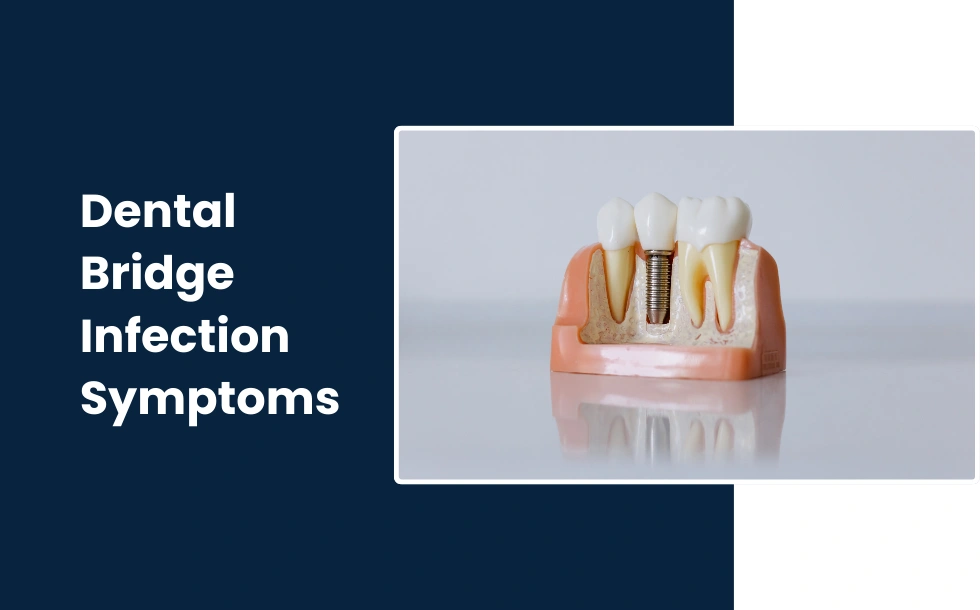
A dental bridge itself does not become infected, but the teeth and gums supporting it can. When bacteria collect under or around a bridge, infection can develop quietly and worsen over time without obvious early warning signs.
Recognizing dental bridge infection symptoms early is important because problems beneath a bridge are often hidden from view. Left untreated, infection can lead to tooth decay, gum disease, abscess formation, or failure of the bridge. Knowing what to watch for helps you act early, when treatment is simpler and more predictable.
Can a Dental Bridge Get Infected – What to Know?
The bridge material cannot become infected. Infection occurs in the natural tooth underneath, the supporting abutment teeth, or the gum tissue beneath the bridge.
This usually happens when plaque and bacteria collect in areas that are difficult to clean, especially if:
- The bridge margin is no longer sealed tightly
- Gum recession has exposed part of the supporting tooth
- Decay has formed under the bridge
- Cleaning under the bridge is incomplete
Because these areas are hidden, infection can progress without obvious early warning signs.

Common Dental Bridge Infection Symptoms
Dental bridge infections often begin subtly and progress gradually. Because the issue develops beneath the bridge, symptoms may be mistaken for minor irritation at first. Paying attention to changes in comfort, gum health, and taste can help identify infection before it becomes more serious.
Pain Under the Dental Bridge
Pain beneath a dental bridge is one of the most common warning signs. This discomfort may feel like a dull ache, pressure, or sharp pain when chewing. Some people notice pain only when biting down, while others experience lingering soreness that does not fully go away. Pain that appears months or years after a bridge was placed is especially concerning and often points to decay or infection affecting one of the supporting teeth.
Swollen or Inflamed Gums Around the Bridge
Healthy gums should appear pink and firm. Swelling, redness, tenderness, or bleeding around a dental bridge is not normal. These changes often indicate bacteria trapped beneath the bridge or gum disease developing around the supporting teeth. Gum inflammation that does not improve with careful brushing and flossing should be evaluated.
Bad Smell or Persistent Bad Taste
A persistent bad smell coming from the bridge area or a foul taste that returns shortly after cleaning can signal infection. This usually occurs when bacteria and decaying tissue are trapped beneath the bridge where brushing cannot reach. An odour that improves briefly but returns quickly is more consistent with infection than simple food debris.
Pus or Drainage Near the Bridge
Pus, drainage, or a small pimple-like bump on the gums near a dental bridge is a sign of active infection. This often indicates an abscess forming beneath the tooth or gum tissue. This symptom should never be ignored and requires prompt dental care.
Infection vs Trapped Food Under a Dental Bridge
Food debris under a bridge can cause temporary irritation or odor, but it usually improves after thorough cleaning. Infection behaves differently. Pain that persists, swelling that does not resolve, drainage, or odor that returns quickly after cleaning are more consistent with infection than with trapped food alone.
If careful cleaning does not resolve symptoms, infection should be suspected and evaluated.
What Causes Infection Under a Dental Bridge?
Infection under a dental bridge typically develops when bacteria gain access to areas that are difficult to clean. This may happen if decay forms on a supporting tooth, if gum disease develops beneath the bridge, or if the cement holding the bridge in place begins to break down over time.
Gum recession can expose parts of the tooth that were previously protected, allowing bacteria to enter. Bite stress and long-term wear can also create tiny gaps that trap plaque and bacteria. These changes often occur slowly and without pain at first.
Dental Bridge Infection Treatment
Treatment depends on the underlying cause and how advanced the infection is. A dentist will usually begin by examining the bridge, checking its fit, and taking X-rays to evaluate the supporting teeth and surrounding bone.
In some cases, professional cleaning and gum treatment may be enough. If decay is present, the affected tooth may need to be treated. When a bridge no longer seals properly or has allowed repeated infection, removal and replacement of the bridge may be necessary. Medication may be used to control active infection, but medication alone does not address the source of the problem.
What You Can Do at Home While You Wait for Care
Home care can help reduce irritation and keep the area clean, but it does not treat infection. Gentle saltwater rinses can soothe inflamed tissue. Cleaning carefully under the bridge with floss threaders or a water flosser helps limit bacterial buildup. Avoid chewing on the affected side and do not attempt to scrape under the bridge with sharp objects.
If symptoms persist or worsen, home care should not delay professional evaluation.
When to See a Dentist Right Away
You should contact a dentist promptly if pain worsens instead of improving, swelling increases, pus is present, or the bridge feels loose. Fever, facial swelling, or pain that wakes you at night may indicate a spreading infection and should be evaluated without delay.
How to Prevent Dental Bridge Infections
Preventing infection starts with daily cleaning under the bridge and along the gumline. Using tools designed to clean beneath bridges makes a meaningful difference. Regular dental checkups allow early detection of changes in fit, gum health, or decay before symptoms become severe.
The Clinical Bottom Line
Dental bridge infections do not happen suddenly, but they can progress quietly beneath the surface. Pain, swelling, odor, drainage, sensitivity, or changes in how a bridge feels should never be ignored. Early evaluation helps protect the supporting teeth and gums and prevents more complex treatment later.
If something feels wrong under a dental bridge, it is worth having it checked sooner rather than later.
Frequently Asked Questions
How can I tell if a dental bridge is infected?
Pain under the bridge, swollen or bleeding gums, bad odor, pus, sensitivity, or a loose bridge can all indicate infection.
Is pain under a dental bridge normal?
Occasional mild irritation can occur, but persistent or worsening pain is not normal and should be evaluated.
Can a cavity form under a dental bridge?
Yes. Decay can develop on the supporting teeth beneath a bridge and is a common cause of infection.