
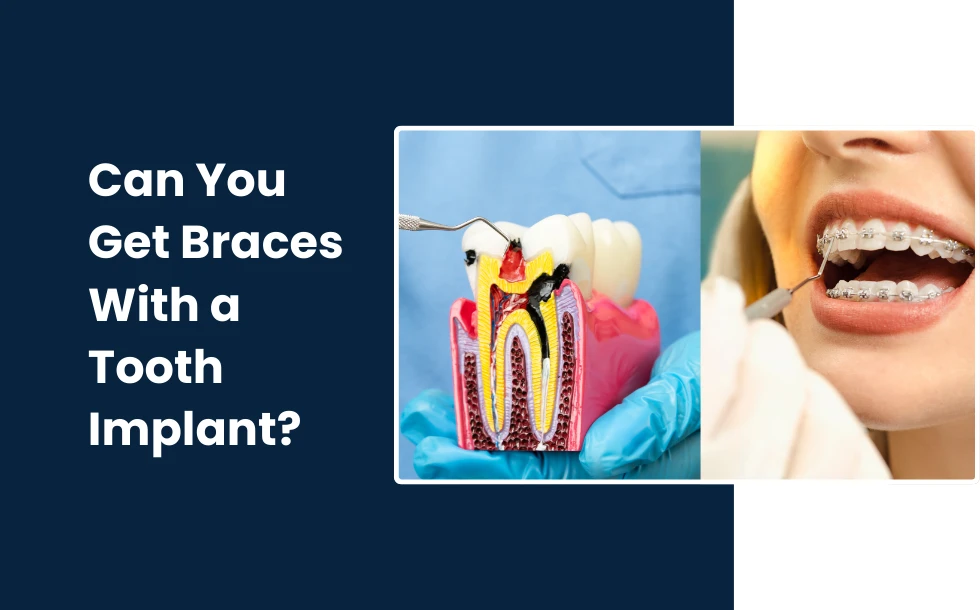
Planning orthodontic treatment becomes more complex when a dental implant is already in place or planned for the future. Implants behave differently from natural teeth, which raises valid questions about movement, spacing, and treatment order. Many patients want straighter teeth without risking an existing restoration or delaying a missing tooth replacement.
Braces and dental implants can often be used in conjunction with each other in various situations. Understanding how each treatment functions, how timing affects results, and why planning matters before either procedure begins helps patients move forward with clarity.
Can You Get Braces With a Tooth Implant
Dental implants do not move once they fuse with the jawbone. This process, known as osseointegration, secures the implant in place and enables it to behave as a fixed structure. Braces move natural teeth by applying controlled force through the bone and surrounding tissue.
Orthodontic treatment can still move surrounding natural teeth while the implant remains stationary. Orthodontists plan tooth movement around the implant and adjust force levels so alignment improves without stressing the restored area.
Teeth can straighten, and spacing can improve while the implant stays stable.

How Braces Work Around Dental Implants
Orthodontic systems only move teeth that still have a living periodontal ligament. Implants lack this structure, which explains why braces cannot reposition them. During treatment, the implant often acts as a reference point while nearby teeth shift into better alignment.
Spacing becomes a major focus. Orthodontists guide teeth into positions that allow proper bite contact, balanced forces, and natural appearance around the implant crown. In some cases, temporary orthodontic tools help guide movement while protecting the implant site.
Careful planning prevents uneven spacing, bite imbalance, or cosmetic issues once treatment ends.
Dental Implant Before or After Braces?
Treatment order plays a major role in long-term results. Orthodontists often recommend completing braces before placing an implant. Moving natural teeth into their ideal positions helps define the exact space needed for the implant. This improves accuracy and reduces the risk of placing the implant too early or off-centre.
When braces come first, dentists can position the implant based on final tooth alignment, not an estimate. This leads to better symmetry, proper bite contact, and fewer corrections later.
Patients who already have an implant can still receive braces. The orthodontist plans movement around the fixed implant and aligns the remaining teeth accordingly. In rare situations, an implant placed before orthodontics may end up slightly out of position after the teeth shift. Early coordination between providers matters.
Do Dental Implants Affect Orthodontic Results
An implant does not prevent orthodontic treatment, but it influences how forces are applied. Since the implant stays fixed, orthodontists must balance movement carefully to avoid uneven pressure during bite correction.
Single implants usually create minimal challenges. Multiple implants or implants placed near areas requiring significant movement need more detailed planning. Retainers become especially important after braces to maintain alignment around the implant and prevent unwanted shifting over time.
Careful planning keeps orthodontic results stable and functional.
Braces, Clear Aligners, and Dental Implants
Both braces and clear aligners can work with dental implants. The choice depends on how much movement is needed, where the implant sits, and how the bite needs correction.
Braces allow precise control when complex movement is required around an implant. Clear aligners can work for mild to moderate alignment changes when the treatment plan accounts for the implant’s fixed position.
Orthodontists determine the best option based on spacing, bite forces, and long-term stability.
Who Should Plan Combined Braces and Implant Treatment
Successful outcomes depend on coordination. Orthodontists manage tooth movement and bite alignment. Dentists or oral surgeons manage implant placement and stability. When both providers communicate early, treatment stays predictable.
Patients benefit most when imaging, spacing, and bite relationships are reviewed together before treatment begins. This avoids delays, prevents repositioning later, and protects the implant investment.
Quick Clarity for Patients
- Implants do not move once placed
- Braces move only natural teeth
- Treatment order affects spacing and bite
- Planning first prevents future correction.
Understanding these points helps patients make informed decisions before starting treatment.
Final Thoughts
Braces and dental implants can work together when treatment follows the correct sequence and careful planning. Implants remain fixed, while braces guide natural teeth into better positions. For many patients, orthodontic treatment first allows more accurate implant placement and long-term stability.
If you already have an implant or expect to need one, speak with both your dentist and orthodontist before starting treatment. Ask how spacing will be managed, how bite forces will be balanced, and how retention will protect results after braces end. Clear planning leads to better alignment and a healthier smile that lasts.
FAQs
Can you straighten your teeth if you already have a dental implant?
Yes. Braces or aligners can move natural teeth while the implant stays fixed. Orthodontists plan around the implant to improve alignment without disturbing the restoration.
Should you get braces or a dental implant first?
Braces often come first. Aligning teeth creates proper spacing and helps determine the most accurate implant position. Patients with existing implants can still receive braces with careful planning.
Can dental implants be used as anchors during braces?
Implants may provide stability in certain orthodontic plans, but they are not used the same way as natural tooth anchors. Orthodontists evaluate force direction and spacing before relying on an implant for stability.
Is there an age limit for getting braces with dental implants?
No. Adults of any age can receive orthodontic treatment. Bone health, gum condition, and overall oral stability matter more than age when combining braces and implants.
Will retainers matter more if I have an implant?
Yes. Retainers help maintain alignment around a fixed implant and prevent surrounding teeth from shifting. Long-term retention supports bite balance and protects orthodontic results.