
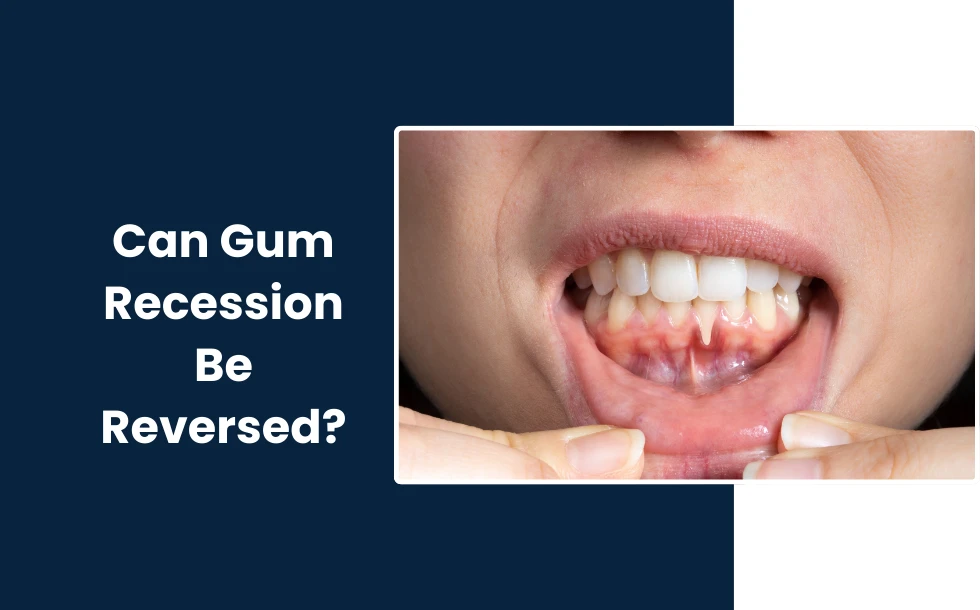
Gum recession often develops quietly. The gumline gradually pulls back, teeth appear longer, and sensitivity becomes more noticeable. At that point, most people want a clear answer to a simple question: Can gum recession be reversed, or is the damage permanent?
Gum tissue does not naturally regrow once it has receded, but that does not mean the condition always leads to tooth loss. In the early stages, gum recession can often be stabilized before serious damage occurs. In advanced stages, reversal is no longer possible, but treatment can still protect exposed roots and preserve teeth.
Outcomes depend on how early the problem is identified and how effectively the underlying cause is addressed.
What Actually Happens When Gum Tissue Recedes
When gum tissue pulls away from a tooth, part of the root surface becomes exposed. Unlike enamel, the root surface is softer and more vulnerable to decay, wear, and sensitivity. Plaque also adheres more easily in these areas, which makes inflammation harder to control over time.
Once the gum detaches from the tooth surface, the body does not rebuild that attachment on its own. For this reason, gum recession follows a progressive pattern. The key issue is not spontaneous healing, but whether progression can be slowed or stopped before more serious structural damage occurs.

What Causes Gum Recession in the First Place
Gum recession rarely develops from a single factor. In most cases, repeated mechanical stress or chronic inflammation gradually weakens the tissue that holds the gum in place. Identifying the primary cause is crucial because it determines the extent of control that is still possible.
- Aggressive brushing habits: Excessive pressure, stiff bristles, or improper brushing technique gradually wear away the gum margin. This type of recession usually progresses slowly and often remains unnoticed until sensitivity or root exposure appears. When identified early, recession related to brushing habits responds well to corrective care.
- Plaque buildup and periodontal disease: Plaque and tartar beneath the gumline create persistent inflammation that weakens gum tissue and damages supporting bone. Recession linked to periodontal disease advances more rapidly and becomes irreversible sooner than recession caused by mechanical irritation alone.
- Teeth grinding and uneven bite forces: Grinding or clenching concentrates force on specific teeth. Over time, this stress contributes to the breakdown of the surrounding gum tissue and bone. Misaligned teeth can intensify the problem by directing pressure unevenly.
- Smoking and reduced blood flow: Smoking limits blood supply to the gums, reducing their ability to resist infection and repair damage. Early warning signs are often masked, allowing recession to progress unnoticed.
- Genetic susceptibility: Some individuals naturally have thinner gum tissue or weaker attachment structures. In these cases, even mild inflammation or brushing stress can trigger recession earlier than expected.
When Gum Recession Can Still Be Controlled
Gum recession can still be controlled when tissue loss remains limited, and bone support around the tooth is intact. At this stage, the gumline may have shifted, but the structures that anchor the tooth remain stable.
Professional care can reduce inflammation, improve tissue stability, and slow further recession. Sensitivity often decreases, plaque becomes easier to manage, and long-term damage can be avoided.
Although the gum margin does not return to its original position, progression frequently stops when treatment begins early. You can book your appointment at our dental office for gum disease treatment in Tucson.
What Early Treatment Can Achieve
In early gum recession, deep cleaning beneath the gumline removes plaque and hardened deposits that keep the tissue inflamed. Smoothing the root surface allows the gums to heal and tighten, which reduces irritation and limits further detachment.
Correcting brushing technique, managing grinding habits, and improving daily oral care are essential at this stage. When these factors are addressed promptly, gum recession often stabilizes and does not advance.
Early treatment does not regenerate lost tissue, but it often prevents the condition from becoming irreversible.
When Gum Recession Is No Longer Reversible
Advanced gum recession involves permanent tissue loss and is frequently accompanied by bone damage around the tooth. At this point, natural reversal is no longer possible.
Treatment goals shift toward preservation. Care focuses on protecting exposed roots, maintaining remaining support, and preventing tooth loss. Without professional intervention, advanced recession continues gradually and can compromise tooth stability.
Treatment Options for Advanced Gum Recession
Once gum recession reaches an advanced stage, treatment focuses on protecting teeth and slowing further deterioration. The appropriate approach depends on the amount of tissue loss, the presence of bone damage, and the stability of the affected tooth.
Periodontal Surgery to Control Disease Progression
When recession extends deep below the gumline, periodontal surgery may be required to remove infection that cannot be addressed non-surgically. This treatment stabilizes remaining tissue and helps prevent further breakdown of tooth support, even though lost gum tissue is not restored.
Regenerative Procedures for Bone and Attachment Loss
When gum recession is accompanied by bone loss, regenerative treatment may be considered. After deep cleaning, biologic materials are placed to encourage rebuilding of supporting structures around the tooth. These procedures aim to improve stability and slow deterioration, with outcomes depending on how advanced the damage is at the time of treatment.
Natural and At-Home Measures to Support Stability
Natural and at-home measures cannot reverse advanced gum recession or regenerate lost tissue. Their role is supportive.
Gentle brushing, consistent interdental cleaning, smoking cessation, and inflammation control reduce bacterial pressure around exposed roots. These steps help slow progression and support healing after professional care. Relying on natural measures alone in advanced cases allows damage to continue.
Gum Grafting to Restore Root Coverage and Protection
When exposed roots require long-term protection, gum grafting is used to restore coverage. Healthy tissue is placed over the exposed area to reduce sensitivity and protect the root surface. Although original gum tissue is not recreated, comfort improves, and teeth are better preserved.
Can Gum Recession Be Fixed Without Surgery?
Non-surgical treatment can be effective when gum recession is detected early and driven by inflammation, plaque buildup, or brushing habits. In advanced cases, non-surgical care alone is not sufficient. Delaying indicated surgical treatment allows further tissue and bone loss, which limits future treatment options.
Final Takeaway
Gum recession does not reverse naturally, and lost gum tissue does not grow back on its own. What can change is how early the condition is recognized and how effectively it is managed.
Early gum recession can often be stabilized before serious damage occurs. Advanced cases require professional treatment to protect exposed roots and preserve teeth. Timing determines the range of available options.
Frequently Asked Questions
Can gum recession be reversed naturally?
No. Gum tissue does not regenerate naturally once it has receded. Improved oral hygiene and lifestyle changes can slow progression and reduce inflammation, but they do not restore lost gum tissue.
Can receding gums grow back after deep cleaning?
Deep cleaning can reduce inflammation and help the gums tighten around the tooth, which improves stability. It does not cause lost gum tissue to grow back, but it can stop early recession from worsening.
How do I know if my gum recession is still treatable?
Gum recession is more manageable when tissue loss is mild, and bone support around the tooth remains intact. A dental examination is needed to determine whether stabilization is still possible or if advanced treatment is required.
Is gum grafting the only way to cover exposed roots?
When significant root exposure is present, gum grafting is the most reliable method to restore coverage and protection. Non-surgical care can reduce irritation but cannot provide lasting root coverage in advanced cases.
Does gum recession always lead to tooth loss?
No. Many people with gum recession keep their teeth long-term with proper treatment and maintenance. Tooth loss becomes a risk when recession progresses untreated, and bone support continues to deteriorate.