
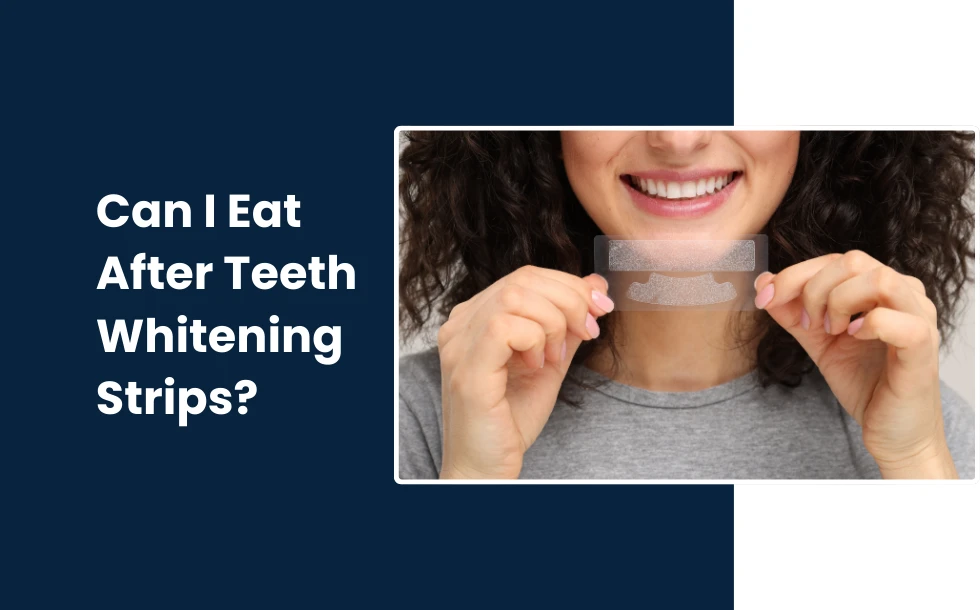
Yes, you can eat after teeth whitening strips, but eating too soon or choosing the wrong foods can weaken your results. Whitening does not end when the strip comes off. The enamel needs time to stabilise, and what you do during that short window plays a real role in how evenly the whitening holds and how long it lasts.
Most people focus only on timing. The more important piece is understanding why timing matters in the first place. Once that is clear, the guidance stops feeling restrictive and starts making sense.
How Long After Teeth Whitening Strips Can You Eat?
Teeth whitening strips work by allowing peroxide-based agents to move into the enamel and break down stain molecules. During this process, teeth temporarily lose moisture and become more absorbent, which is why timing matters after the strips are removed.
Here is a practical timeline that explains when eating becomes safer and why recommendations often vary:
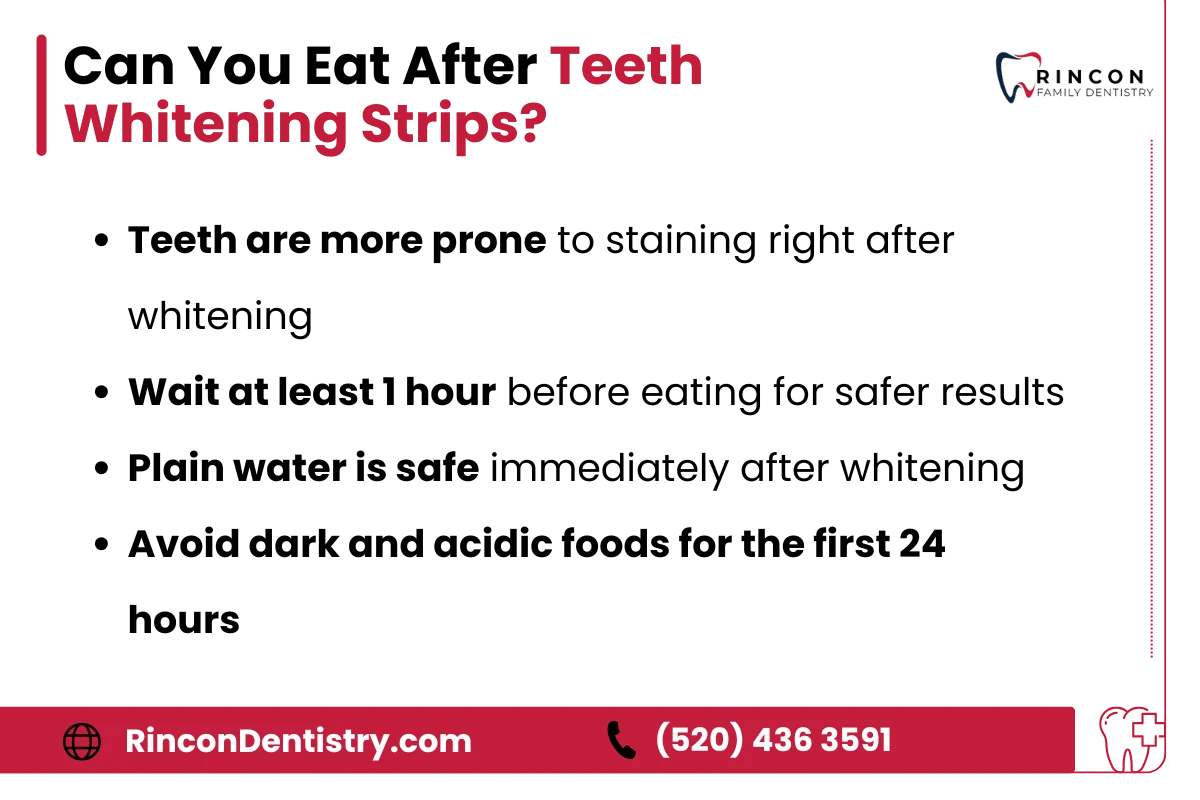
- First 60 minutes
Avoid eating or drinking anything except plain water. This is when teeth are most vulnerable to staining and sensitivity. - After 1 to 2 hours
Light, non-staining foods may be tolerated if needed, although some sensitivity can still be present. - After 2 to 3 hours
Teeth are typically rehydrating, and stain risk drops noticeably. This is the safest window to resume eating more comfortably. - Within the first 24 hours
Dark, acidic, or highly pigmented foods and drinks should still be limited to protect whitening results.
This gradual recovery explains why advice sounds inconsistent online. Whitening effects do not stop at a single time point. Risk fades over time rather than ending all at once.
What Whitening Strips Actually Do to Teeth
Teeth whitening strips use peroxide to break down stain molecules that sit on the surface of the enamel and just beneath it. When used as directed, this process is safe; however, it temporarily alters how the enamel responds to its environment.
After whitening, the enamel surface becomes slightly dehydrated and more permeable to substances. During this short window, teeth react more strongly to pigments, acids, and temperature changes. This explains why sensitivity is more common immediately after treatment and why stains can settle more easily if precautions are ignored. The change is temporary, but it is meaningful enough to influence both comfort and cosmetic results.
This also explains why whitening experiences vary from person to person. Enamel thickness, saliva flow, and pre-existing sensitivity affect how quickly teeth rehydrate and stabilize. These same factors are why waiting before eating plays such an important role in protecting results.
Can I Drink Water After Using Teeth Whitening Strips?
Yes. Plain still water is safe and encouraged after whitening strips. It helps rinse away residual gel, supports saliva flow, and aids enamel rehydration without introducing pigments or acids.
Confusion often comes from assuming all clear drinks behave the same way. Flavored waters, sparkling waters, and sports drinks frequently contain acids that irritate recently whitened teeth. Even without color, acidity alone can increase sensitivity during early recovery.
If you drink anything shortly after whitening, plain water is the correct choice.
What Happens If You Eat Too Soon After Whitening Strips?
Eating too soon does not usually damage teeth, but it can reduce how successful the whitening feels. Pigments can settle into enamel before it has fully rehydrated, leading to uneven color that people often interpret as whitening failure. Temperature extremes can also trigger sensitivity that lasts longer than expected.
If eating too soon happens by accident, rinsing with water and returning to lighter foods for the rest of the day usually limits the impact.
Foods and Drinks That Cause the Most Problems After Whitening
Dark and acidic foods pose the highest risk during the first 24 hours. Coffee, tea, red wine, soda, berries, tomato-based sauces, soy sauce, citrus fruits, and vinegar-heavy foods are common triggers for staining and sensitivity.
Texture and temperature also matter. Sticky foods cling to enamel and increase cavity risk at a time when brushing may feel uncomfortable. Very hot or very cold foods can trigger sharp sensitivity while teeth are still stabilising.
What Is Safer to Eat After Teeth Whitening Strips?
Light-colored, low-acid foods are the safest choice after whitening. Dairy products are especially helpful because they are gentle on enamel and help neutralize acids. Plain proteins such as eggs, chicken, turkey, and white fish provide nutrition without staining risk. Simple starches like rice, pasta, potatoes, and oatmeal are also well tolerated.
Fruits such as apples and bananas are generally acceptable in moderation. Foods closer to room temperature tend to be more comfortable during the first few hours.
Can I Use Teeth Whitening Strips After Eating?
Yes, but timing plays an important role. Whitening strips work best on clean, dry teeth. Food residue and excess saliva interfere with even contact and increase the chance of uneven results or sensitivity.
Brushing and flossing first, then waiting about 20 to 30 minutes before applying the strips, allows saliva levels to normalise and reduces irritation. Applying strips immediately after eating or brushing is a common reason people experience discomfort.
How Long Do Whitening Strip Results Usually Last?
For most people, whitening strip results last six months to one year. Diet, oral hygiene habits, enamel quality, and frequency of staining exposure all influence longevity.
People who frequently consume coffee, tea, or soda often see results fade sooner. Those who maintain good oral hygiene and limit staining foods tend to maintain results longer without frequent touch-ups.
Professional Takeaway
You can eat after teeth whitening strips, but timing and food choices matter. Waiting at least one hour, allowing a few more hours when possible, drinking plain water, and avoiding dark or acidic foods for the rest of the day protect whitening results and reduce sensitivity.
When whitening causes ongoing discomfort or uneven color, it usually indicates that enamel needs a different approach. That is when professional guidance becomes valuable.
Frequently Asked Questions
Can I eat after using teeth whitening strips?
Yes, but you should wait at least one hour before eating. Waiting two to three hours offers better protection against staining and reduces the chance of tooth sensitivity.
Can I drink water after using teeth whitening strips?
Yes. Plain still water is safe and encouraged immediately after whitening. Flavored or carbonated drinks should be avoided for the first few hours.
How long should I avoid dark foods after whitening?
Dark and acidic foods should be avoided for at least 24 hours after whitening to protect the results and limit sensitivity.