
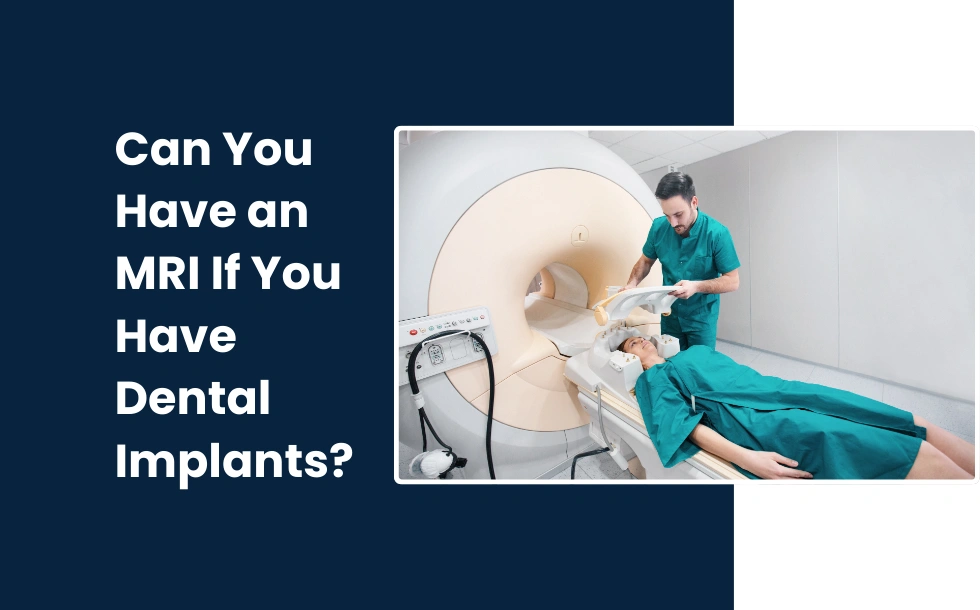
Many patients feel unsure when they need an MRI and already have a dental implant in place. The idea of strong magnetic fields near metal often raises questions about safety and image accuracy. Most modern implants do not react to MRI equipment, and radiologists scan patients with these restorations every day. This gives reassurance, yet it is still important to understand how different materials behave during the scan.
Knowing which implants work safely inside an MRI machine, and when extra evaluation is needed, helps remove uncertainty before your appointment. This guide explains how MRI technology interacts with dental implants, why some materials create small image changes, and what you should share with your care team before the scan.
Are Dental Implants Safe in MRI
Most modern dental implants are safe for MRI scans. Titanium and zirconia are the most common materials used for implant posts. These materials do not attract magnetic fields and do not interfere with the body during a scan. Radiology teams work with these restorations every day and know how to position patients for clear images.
Even though the material is considered safe, always tell the radiologist about your implant so they can plan the scan around the restored area and set the correct imaging parameters.

What Implants Are Not Safe for MRI
Some older or uncommon implant systems contain metals that react to magnetic fields. These materials can warm slightly or distort the surrounding image. Restorations that contain iron, nickel, or cobalt carry a higher chance of interaction with MRI equipment.
Patients also ask about dentures and removable appliances. Dentures need to be taken out before the scan because they often contain metallic parts. Restorations such as crowns, bridges, and fillings usually remain in place. Ceramic, resin, and porcelain materials do not interfere with MRI scans.
If you have a metal-based crown or a post placed inside a tooth, the radiology team may ask about the material so they can adjust their imaging settings and reduce the chance of distortion.
Do Dental Implants Affect MRI
Dental implants rarely affect MRI results. Most scans show very small distortions around the implant site, and these usually appear only when the head, jaw, or neck is being imaged. Radiologists understand how to work around these changes by adjusting the position of the patient or by using sequences that reduce artefacts.
Implants placed outside the head and neck area do not influence scans of the spine, chest, abdomen, or other regions.
Potential Risks and Concerns with MRI and Dental Implants
MRI scans are considered safe for patients with modern implant systems, yet a few concerns remain. These concerns do not occur often, but must be understood clearly.
Below are the main issues radiologists monitor during an MRI scan.
Minor Image Distortion
Some implants create a small shadow or blur in the surrounding image. This effect is called an artefact. It does not harm the patient, but it can make it harder to see tiny details in nearby tissue. Radiologists adjust their settings to manage this issue.
Heat or Vibration in Rare Cases
Older implants that contain magnetic metals can warm slightly during the scan. This is rare with today’s implant systems. If you feel pressure or warmth during the scan, tell the technologist so they can pause and assess the cause.
Movement Concerns With Older Metal Systems
Very old implants made with ferromagnetic metals may move slightly inside the magnetic field. Modern implants do not carry this risk because titanium and zirconia do not respond to magnets. If you have an implant placed many years ago, your dentist can confirm the material before your MRI appointment.
How to Prepare for an MRI When You Have Dental Implants
Clear communication helps radiology teams plan a safe and accurate scan. Patients should share the full details of their dental and medical history, including:
type of implant system
- year the implant was placed
- any metal posts or restorations inside the tooth
- presence of dentures, partials, or retainers
- history of metal allergies
When radiologists know the material, they can use imaging settings that reduce distortion and protect the surrounding tissue from unnecessary stress.
Never assume all dental materials are MRI safe. Sharing complete information prevents complications and supports accurate results.
Final Thoughts
Modern dental implants are designed to remain stable inside MRI machines, which means most patients can undergo scans without concern. Titanium and zirconia do not react to magnetic fields, and any minor distortion near the implant is manageable for trained radiology teams.
If you have an older restoration or are unsure of the material used, speak with your dentist before the scan. Clear communication helps your radiologist plan correctly, so you receive the most accurate images possible.
FAQs
Will a dental implant interfere with an MRI?
Most implants do not interfere with MRI scans because titanium and zirconia do not react to magnetic fields. Small artefacts may appear near the implant site during head or jaw scans, and radiologists know how to adjust for these changes.
What is not true about dental implants in relation to MRI safety
It is not correct to assume every implant is safe for MRI. Older or uncommon metal systems may react to magnetic fields and can affect image quality. Your care team needs to know the material before the scan.
What happens if you have an MRI with metal implants
If an implant contains magnetic metals, the image may blur slightly, or the area may feel warm during the scan. These reactions are uncommon with modern restorations. Always tell your radiology team about any metal in your mouth so they can plan the scan safely.