
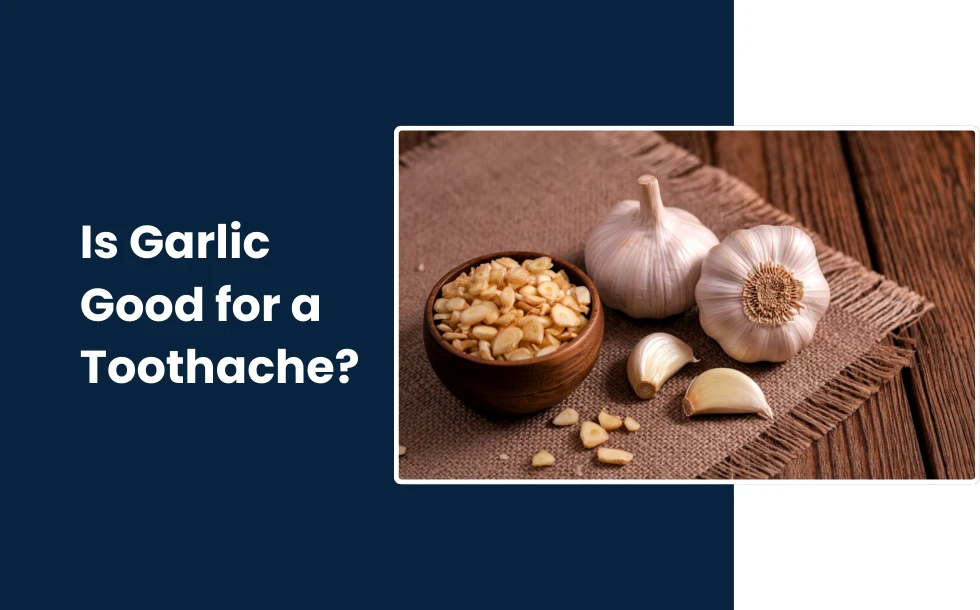
Garlic helps relieve toothache pain temporarily by reducing bacterial activity and calming inflammation. Its natural compounds address common triggers behind dental discomfort, such as irritated gums and early infection.
Garlic does not fix the underlying dental problem, but it helps control pain and pressure until professional care is available.
Below, you will learn how garlic helps with tooth pain, how people commonly use it, how long it should stay on the tooth, why it sometimes burns, and when garlic is not enough.
How Garlic Helps With Tooth Pain
When garlic is crushed or chewed, it releases allicin. Allicin is a biologically active compound known for its antibacterial and anti-inflammatory effects, which explains garlic’s long history in dental pain relief.
Many toothaches start when bacteria irritate the tooth pulp or surrounding gum tissue. Garlic reduces bacterial buildup and limits inflammation around the affected area. This combination helps ease throbbing, sensitivity, and pressure, especially when discomfort comes from gum irritation, trapped food, or early infection.
Garlic does not repair tooth damage or stop nerve exposure, but it reduces the conditions that intensify pain.

Does Garlic Help With Tooth Infection or Abscess?
Garlic slows bacterial growth around irritated gums or an infected tooth, which helps reduce pain and swelling in mild cases. This explains why people often turn to garlic for early gum infections or initial abscess-related discomfort.
A true tooth abscess develops deep below the tooth or gum line. Garlic does not drain an abscess or eliminate a deep infection. When swelling spreads, pain worsens, or fever appears, garlic serves only as short-term pain control while dental treatment is arranged.
How to Use Garlic for Toothache
Garlic works best when it is fresh and prepared properly. It works by releasing active compounds while keeping contact brief to avoid irritation.
Common ways people use garlic for tooth pain include:
- Crushed garlic clove: A fresh clove is peeled and gently crushed to release allicin, then placed near the painful tooth or sore gum area for a short time before rinsing.
- Brief chewing: Some people chew a small piece on the affected side to activate the compounds, then remove it once the strong sensation begins.
- Garlic paste: Crushed garlic is sometimes applied carefully near the sore area rather than pushed directly into a cavity.
- Garlic oil: A small amount of garlic oil is placed on a cotton ball and rested near the painful area instead of applying it directly to the gums.
Regardless of the method, garlic works best when used sparingly, for short contact, and removed promptly.
How Long to Leave Garlic on a Toothache
Garlic should stay on the tooth or gums for no more than 5 to 10 minutes.
Longer exposure does not increase relief and often leads to gum irritation or sensitivity. Garlic is potent, especially on inflamed tissue. After removing it, rinse the mouth thoroughly with water to clear any residue.
Why Does Garlic Burn on a Toothache?
The burning sensation comes from sulfur compounds in garlic activating pain receptors in the mouth. These receptors also respond to heat and irritation, which explains the sharp or hot sensation some people feel when garlic contacts sensitive tissue.
Burning does not signal healing. If discomfort increases, garlic should be removed immediately, and the mouth rinsed.
Garlic for Gum Infection and Swollen Gums
Garlic reduces bacterial buildup along the gum line, which helps ease soreness and swelling caused by mild gum irritation. It works best when discomfort relates to plaque accumulation or food trapped between teeth.
Persistent gum swelling, bleeding, or tenderness often indicates gum disease. Garlic does not resolve these conditions. Professional dental cleaning and treatment remain necessary.
When Garlic Is Not Enough
Garlic does not fix cracked teeth, deep cavities, nerve exposure, or advanced infections. Tooth pain that lasts more than a day or two, returns repeatedly, or intensifies requires dental care.
Seek dental evaluation promptly if you notice:
- Persistent or severe pain
- Swelling in the gums, face, or jaw
- Fever or a foul taste in the mouth
- Bleeding or pus near a tooth
Garlic helps manage discomfort, but it should not delay proper treatment.
Final Thoughts
Garlic is good for a toothache when the pain stems from bacteria or gum inflammation. Its antibacterial and anti-inflammatory properties help reduce discomfort and pressure, making it a useful short-term home remedy. Garlic works best when used carefully and briefly, and it does not replace professional dental care.
If tooth pain continues, worsens, or spreads, a dentist should evaluate the cause and recommend appropriate treatment.
FAQs
Does garlic work for tooth nerve pain?
Garlic helps when pain relates to bacteria or inflammation around the tooth or gums. Nerve pain caused by deep decay or exposed pulp usually does not respond well to garlic and often requires dental treatment.
Is it safe to put garlic directly on the gums?
Garlic irritates soft tissue if left in place too long. Short contact near the affected area is usually tolerated, but prolonged exposure increases the risk of gum soreness or burning.
Can garlic make tooth pain worse?
Yes. Leaving garlic on too long or applying it directly to sensitive tissue can increase irritation and discomfort rather than relieve it.
What should you do if garlic does not help with tooth pain?
If pain does not ease or returns quickly, the underlying issue likely needs dental evaluation. Garlic should not delay professional care when symptoms persist.