
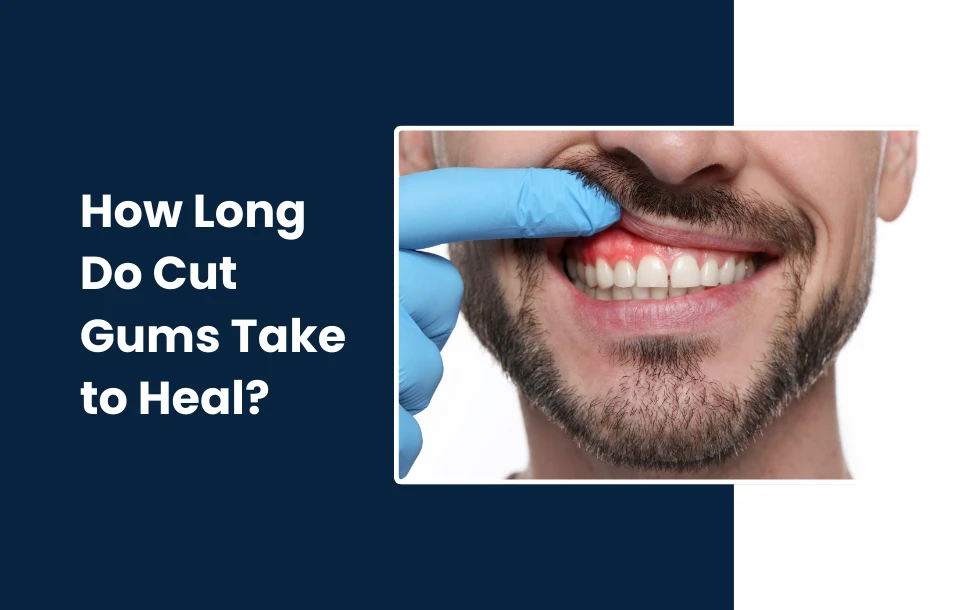
Most cut gums heal faster than people expect. Minor gum cuts usually heal within one to three days, while deeper gum injuries often take seven to fourteen days. Because gum tissue repairs itself quickly, healing is usually noticeable within the first few days. Recovery time mainly depends on how deep the cut is, whether the area keeps getting irritated, and whether an infection develops.
This guide explains how long cut gums take to heal, what normal healing looks like, what slows recovery, and when a gum injury needs dental care.
Cut Gum Healing Time: What to Expect
Gum healing time varies because not all cuts affect the tissue in the same way. Shallow cuts heal quickly, while deeper or torn gum injuries need more time for the tissue to rebuild. Continued irritation from brushing, chewing, or dental appliances can also delay recovery.
In most cases, gum healing progresses steadily when the area stays clean and protected. When healing stalls or pain worsens, it usually signals deeper tissue involvement or infection rather than normal recovery.

Healing Time for Minor Gum Cuts
Minor gum cuts often happen from aggressive brushing, flossing mishaps, sharp foods, or mild irritation. These cuts usually bleed briefly and feel sore, but do not involve significant tissue damage.
Pain and tenderness typically decrease within the first day, and the gum surface starts closing soon after. Most minor gum cuts feel much better within two to three days and heal fully within a week when irritation is avoided.
Healing Time for Deep or Torn Gum Cuts
Deep gum cuts take longer because more tissue needs to regenerate. These injuries may occur after dental procedures, trauma, torn gum tissue around a tooth, or constant rubbing from sharp appliances.
Tenderness often lasts several days, and the gum may look swollen or uneven during healing. Most deep gum cuts improve gradually over one to two weeks. If pain does not improve or the area looks worse after the first week, a dental evaluation is important.
What Normal Gum Healing Looks Like
As gums heal, changes in appearance are common and often cause unnecessary concern. Normal healing usually includes decreasing pain, less bleeding during brushing, and a gradual reduction in redness and swelling.
A cut inside the mouth may develop a white or pale layer during healing. This often represents new tissue forming over the wound rather than infection, especially when discomfort continues to improve.
Signs a Gum Cut Is Not Healing Properly
Some symptoms suggest healing is delayed or an infection is developing. Pain that increases instead of improving, swelling that spreads, or redness that worsens over time raises concern.
Pus, a foul taste, fever, or a gum cut that does not improve after ten to fourteen days also indicate a problem. When these signs appear, waiting longer rarely helps and may allow the issue to worsen.
What Helps Cut Gums Heal Faster
Most gum cuts heal without special treatment, but gentle care supports faster recovery. Keeping the area clean without scrubbing allows tissue to repair itself. Warm saltwater rinses help control bacteria and soothe inflamed tissue.
Eating soft foods reduces friction during chewing, while avoiding sharp, spicy, or acidic foods prevents reopening the wound. When tenderness spreads to the cheek or jaw, cold compresses applied externally can help reduce swelling.
What Slows Gum Healing
Healing slows when the gum continues to experience irritation. Aggressive brushing or flossing commonly reopens healing tissue and delays recovery. Smoking and vaping restrict blood flow, which interferes with tissue repair.
Poor oral hygiene allows bacteria to interfere with healing. Medical conditions such as diabetes or immune disorders also slow recovery. Rough fillings, broken teeth, or dental appliances that rub against the gums can prevent proper healing until the source of irritation is corrected.
Do Gums Grow Back After Being Cut?
Gums usually grow back after minor cuts once inflammation resolves and healing is complete. Gum tissue regenerates well when the injury is shallow and protected during recovery.
Deep injuries or repeated trauma can heal differently. Instead of regrowing fully, the gum may pull away from the tooth, leading to recession. When gum tissue does not return to its normal position, dental evaluation helps prevent long-term sensitivity or structural problems.
When a Cut on the Gums Needs a Dentist
Dental care is recommended when gum pain lasts longer than seven to ten days, keeps returning, or worsens over time. Swelling that spreads to the jaw or face, fever, pus, or a torn gum around a tooth that does not improve also requires evaluation.
Professional care ensures infection is controlled and healing progresses safely instead of stalling.
Final Thoughts
Most cut gums heal quickly because oral tissue repairs itself efficiently. Minor injuries improve within days, while deeper cuts need more time and careful attention. Knowing what normal healing looks like helps reduce worry and prevents delays when professional care is needed.
If a cut on the gums does not heal, worsens, or shows signs of infection, a dentist should evaluate the area and guide proper treatment.
FAQs
How long do cuts in the mouth take to heal?
Most minor mouth cuts heal within a few days, while deeper injuries may take up to two weeks.
Is it normal for a cut inside the mouth to turn white?
Yes. A white or pale layer often forms during normal healing and usually fades as recovery continues.
Can brushing slow gum healing?
Yes. Aggressive brushing or flossing can reopen a healing cut and delay recovery.
When should I worry about a gum cut?
If pain, swelling, or redness worsen or do not improve after seven to ten days, a dental evaluation is advised.