
Eating the right foods after dental implant surgery helps protect the healing site and supports your jaw and gums in recovering without irritation. Your mouth feels tender in the first few days, and gentle meals support comfort while the implant settles into the bone. A careful diet also helps prevent pressure on the blood clot, which is crucial for stable healing.
This guide explains what to eat, what to avoid, and how to progress your meals as the surgical area becomes stronger.
Foods to Eat After Dental Implant Surgery
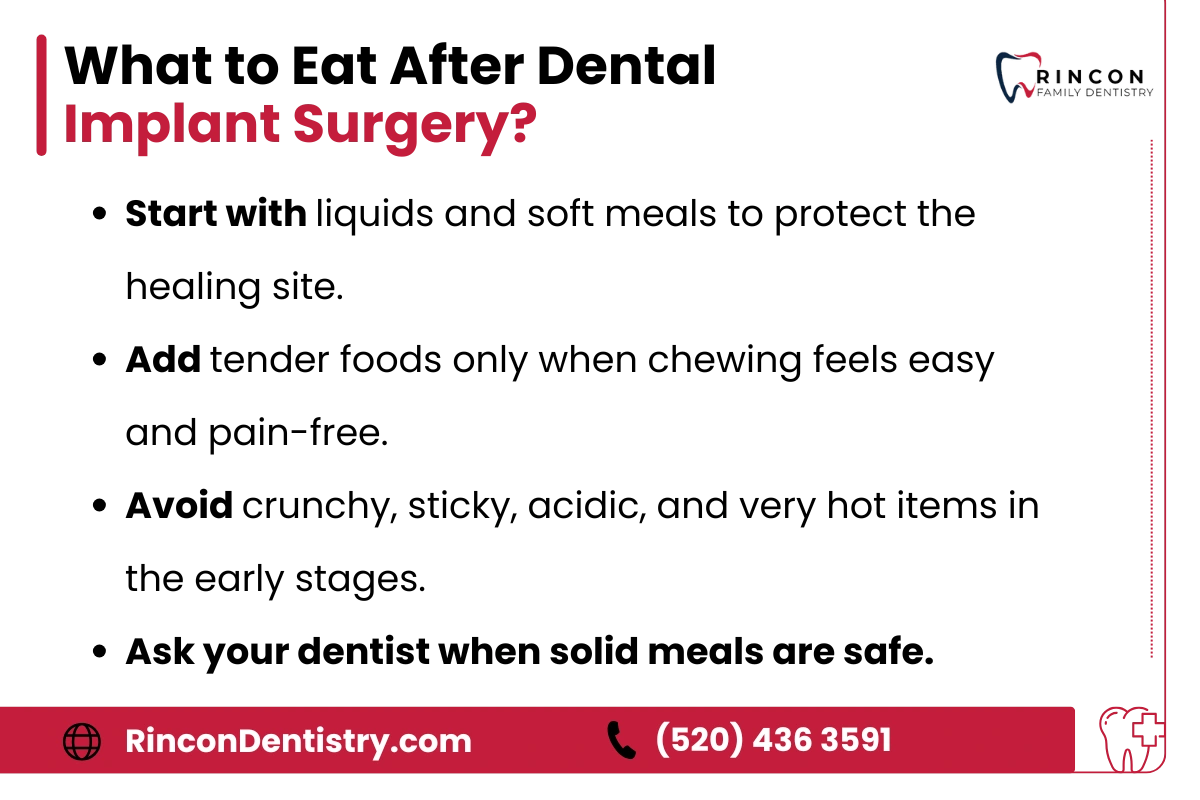
A balanced diet supports early healing and keeps strain away from the implant while your tissues recover. Start with liquids and very soft textures, then add more variety as swelling improves and soreness decreases.
Below are safe foods that support recovery and reduce stress on the surgical site.
Smoothies, Shakes, and Soups
These choices suit the first twenty-four to forty-eight hours when chewing feels difficult. Cool soups, blended smoothies, and shakes provide hydration, vitamins, and protein without disturbing the surgical area.
Use a spoon instead of a straw so you do not create suction near the implant.
Soft Cooked Cereals
Warm cereals are suitable once liquids feel easy to manage. Oatmeal, mashed fruits, and cream of wheat offer nutrients in a soft consistency. They reduce chewing strain and supply steady energy.
Yoghurt or milk adds protein, which supports tissue repair during recovery.
Scrambled Eggs
Eggs provide protein that supports gum and bone healing. Their soft texture limits chewing force near the implant. You can mix in finely cooked vegetables when your mouth handles small additions without soreness.
They also supply vitamin D and phosphorus, which contribute to bone health.
Mashed Sweet Potatoes
Mashed sweet potatoes provide vitamins and antioxidants that aid tissue repair. Their smooth texture keeps chewing effort low and feels gentle on sensitive areas.
Soft Meat and Cooked Vegetables
After the first week, you can add tender meats and cooked vegetables if chewing causes no irritation. Choose soft textures such as shredded chicken, flaked fish, or very tender beef. Pair these with fully cooked vegetables for added nutrients.
Avoid any food that requires strong biting or tearing since sideways forces disturb the implant during early integration.
Foods to Avoid After Dental Implant Surgery
Avoiding certain foods helps protect the surgical area from irritation and unwanted pressure. Specific textures and ingredients can slow healing or trigger soreness.
Below are foods to stay away from until your dentist confirms that the tissue has strengthened enough for firmer chewing.
Crunchy Snacks
Chips, popcorn, and similar snacks can disturb the blood clot and irritate the gums. Small pieces may slip into the healing area and cause discomfort or infection. Even light chewing may place strain on the implant.
Hard Fruits and Raw Vegetables
Raw carrots, apples, and similar foods require a strong biting force. This force can interrupt early healing. Choose soft fruits and cooked vegetables during the first several weeks.
Sticky and Chewy Foods
Items such as gummies, caramel, and taffy cling to the teeth and strain the implant area. This added pressure irritates soft tissue and raises the risk of infection because sticky foods trap bacteria.
Acidic Meals and Drinks
Tomatoes, citrus fruits, and acidic juices create a stinging sensation on fresh tissue. Acid also slows healing by irritating the surgical site. Neutral-flavoured meals feel easier for most patients during the early stages.
Very Hot and Spicy Foods
High heat and strong spices can increase swelling and soreness. Your gums remain sensitive after surgery, and high temperatures may disturb the clot that protects the implant.
When Can You Eat Solid Food After a Dental Implant
Many patients begin adding gentle solid food around six to eight weeks after surgery. Healing speed depends on bone strength, gum health, and the number of implants placed. Your dentist checks the stability of the implant and guides you on safe timing.
If chewing creates pressure or soreness, return to softer meals until the tissue settles.
Final Thoughts
A careful diet protects the implant during early healing. Start with liquids, move to soft textures, and add solids only when your mouth handles chewing without soreness. Good nutrition supports tissue repair and keeps stress away from the implant.
If you feel unsure about your food choices or notice pain during chewing, contact your dentist for guidance.
FAQs
What are the do’s and don’ts after a tooth implant?
Follow postoperative instructions, brush gently, keep the area clean, and choose soft meals during the early stages. Avoid smoking, hot drinks, and hard or chewy items that place pressure on the implant.
How can I speed up dental implant healing?
Support healing by choosing soft foods, keeping the mouth clean, staying hydrated, and avoiding any force near the surgical area. Follow your dentist’s postoperative guidance for the best results.