
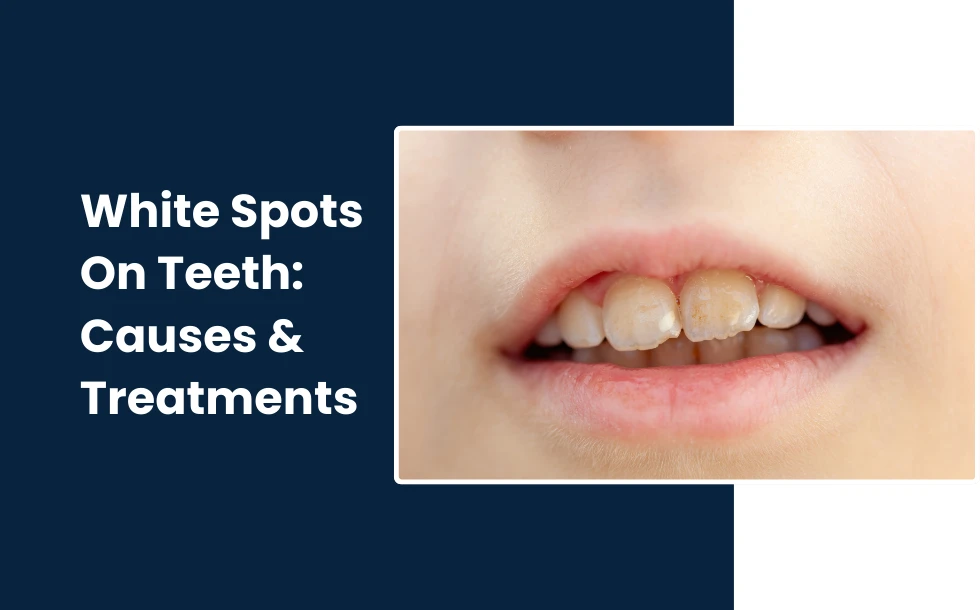
White spots in teeth often look noticeably lighter than the surrounding enamel, even when the rest of the tooth appears healthy. Some people notice a single white spot on one tooth, while others see streaks or patchy white areas across several teeth. These changes can raise concerns about decay, damage, or permanent cosmetic issues.
In most cases, white spots in teeth reflect changes within the enamel rather than surface stains. Understanding what causes them and how they can be reduced or removed helps determine whether simple care or professional treatment is needed.
What Are White Spots in Teeth?
White spots in teeth are areas where enamel appears chalky, opaque, or brighter than the surrounding tooth surface. They may show up as small dots, streaks, or larger patches. These areas often feel smooth to the touch but reflect light differently because the enamel structure beneath the surface has changed.
Unlike plaque or food residue, white spots do not brush away easily. The change occurs within the enamel itself, which explains why appearance alone does not reveal severity.

What White Spots on Teeth Reveal About Enamel Health
Healthy enamel contains tightly packed minerals that give teeth strength and a uniform color. When enamel loses minerals or develops unevenly, light scatters differently across the surface, creating visible white areas. This change signals an imbalance in enamel health rather than a surface issue.
White spots that remain smooth and stable often reflect past mineral loss or developmental differences. Spots that spread, feel rough, or darken over time deserve closer attention, as changes in behaviour matter more than appearance alone.
Common Causes of White Spots on Teeth
Several conditions can lead to white spots, and identifying the cause matters because treatment success depends on it.
Early Enamel Demineralization
One of the most common causes involves mineral loss from enamel. Acids from plaque, sugary foods, or frequent snacking draw minerals out of the tooth surface. Early demineralization often appears as chalky white spots and represents the earliest stage of tooth decay.
At this stage, enamel remains intact and still responds well to targeted treatment.
White Spots After Teeth Whitening
White spots sometimes become more noticeable after whitening treatments. Whitening agents lighten enamel evenly, but areas of weaker enamel respond differently from surrounding areas. As a result, pre-existing white spots become more visible.
These spots were already present before whitening and were simply less noticeable beforehand.
Enamel Hypoplasia and Developmental Defects
Some white spots form while teeth are developing. Enamel hypoplasia occurs when enamel does not form completely, leaving thin or uneven areas. These spots often appear on front teeth and may be present since childhood.
Because the enamel structure is altered, these white marks cannot be removed through home care alone.
Dental Fluorosis
Fluorosis develops when excess fluoride exposure occurs during tooth formation. It commonly appears as white streaks, specks, or patches. Mild fluorosis affects appearance only and does not weaken teeth.
These spots typically remain stable unless cosmetic treatment is used.
Plaque Accumulation and Orthodontic Treatment
White spots frequently develop around braces or orthodontic attachments. Plaque builds up easily in these areas, allowing acids to weaken enamel. These spots often appear on front teeth and become noticeable after braces are removed.
How to Get Rid of White Spots on Teeth
Removing or reducing white spots depends on the underlying cause. Some spots can be reversed or blended with early intervention, while others require professional dental treatment to visibly reduce or eliminate them.
How White Spots on Teeth Can Be Reduced at Home
White spots caused by early enamel demineralization can often be reduced through remineralization. Fluoride toothpaste, consistent oral hygiene, and limiting acid exposure allow minerals to re-enter weakened enamel. Saliva supports this process, which makes proper hydration important.
Diet choices also play a role. Reducing frequent snacking and acidic drinks limits further mineral loss. These measures work gradually and are most effective when white spots are addressed early.
Dental Treatments That Remove White Spots on Teeth
When white spots do not respond to home care, dental treatments provide more direct removal or blending. Resin infiltration integrates white spots into the surrounding enamel without drilling. Microabrasion removes shallow enamel defects. Professional remineralization treatments strengthen early enamel damage.
For deeper or structural defects, bonding or veneers can visually eliminate white spots. Whitening alone does not remove white spots and may make them stand out unless combined with other treatments.
Do White Spots on Teeth Go Away?
Some white spots fade or become less visible over time, especially those related to early mineral loss. Others remain unless treated professionally. Developmental defects and fluorosis do not disappear on their own but can be reduced or masked with cosmetic dental treatment.
Knowing the cause helps set realistic expectations and guides treatment decisions.
When White Spots Need Professional Evaluation
White spots should be evaluated when they spread, trap plaque, feel rough, or change color. Spots associated with sensitivity or decay also require dental assessment. Early evaluation helps prevent progression and expands treatment options.
Clear Takeaway
White spots in teeth result from changes within the enamel, not surface stains. Some can be reduced or removed with remineralization and careful oral care, while others require dental treatment to visibly eliminate them. The best results come from early identification and cause-based treatment rather than cosmetic masking alone.
Frequently Asked Questions
What are white spots on teeth?
They are areas of enamel that reflect light differently due to mineral loss or developmental changes.
Can white spots on teeth be removed?
Many can be reduced or removed with dental treatment, depending on the cause.
Why did white spots appear after whitening?
Whitening exposes existing enamel differences by lightening the surrounding enamel.
Are white spots a sign of tooth decay?
They can indicate early enamel demineralization, which is reversible when treated early.